


By:Kelcie Moseley-Morris and Anna Spoerre
Missouri Independent
Two Missouri women who had abortions 50 years ago testified Tuesday to mental health effects they suffered from the procedure
KANSAS CITY — The first slate of witnesses from the Missouri Attorney General’s office in the fight to uphold statewide abortion regulations offered testimony that professionals and scientific studies have long disputed, including claims about mental health outcomes and abortion medication.
It’s the second week of a 10-day bench trial that will be decided by Jackson County Judge Jerri Zhang. Missouri’s Planned Parenthood affiliates, along with the ACLU of Missouri, filed the lawsuit over Missouri’s few dozen Targeted Regulation of Abortion Providers, or TRAP, laws, claiming they are now unconstitutional under the state’s reproductive rights amendment approved by voters in 2024.
Advocates say those laws made abortion almost completely inaccessible in the years leading up to 2022, when a near-total ban was implemented across the state.
The state constitution now prohibits the state from denying, delaying or interfering with abortion access unless it demonstrates “a compelling governmental interest achieved by the least restrictive means.”
A majority of the testimony on Tuesday focused on mental health, including two women who took the stand to talk about their own abortions more than 50 years ago.
Linda Raymond, who grew up in St. Louis, said she had an abortion when she was 18 after pressure from her mother, who she said was embarrassed and angry that her daughter had gotten pregnant. Raymond testified that her mother beat her when she discovered she was pregnant.
The nurse and doctors at the Planned Parenthood she went to in 1976 didn’t inform her about the risks or potential complications of abortion, she said, or about the alternatives of adoption or parenting.
“If I had those things in front of me, I would have reconsidered,” Raymond said. “I would have pushed back on my mother.”
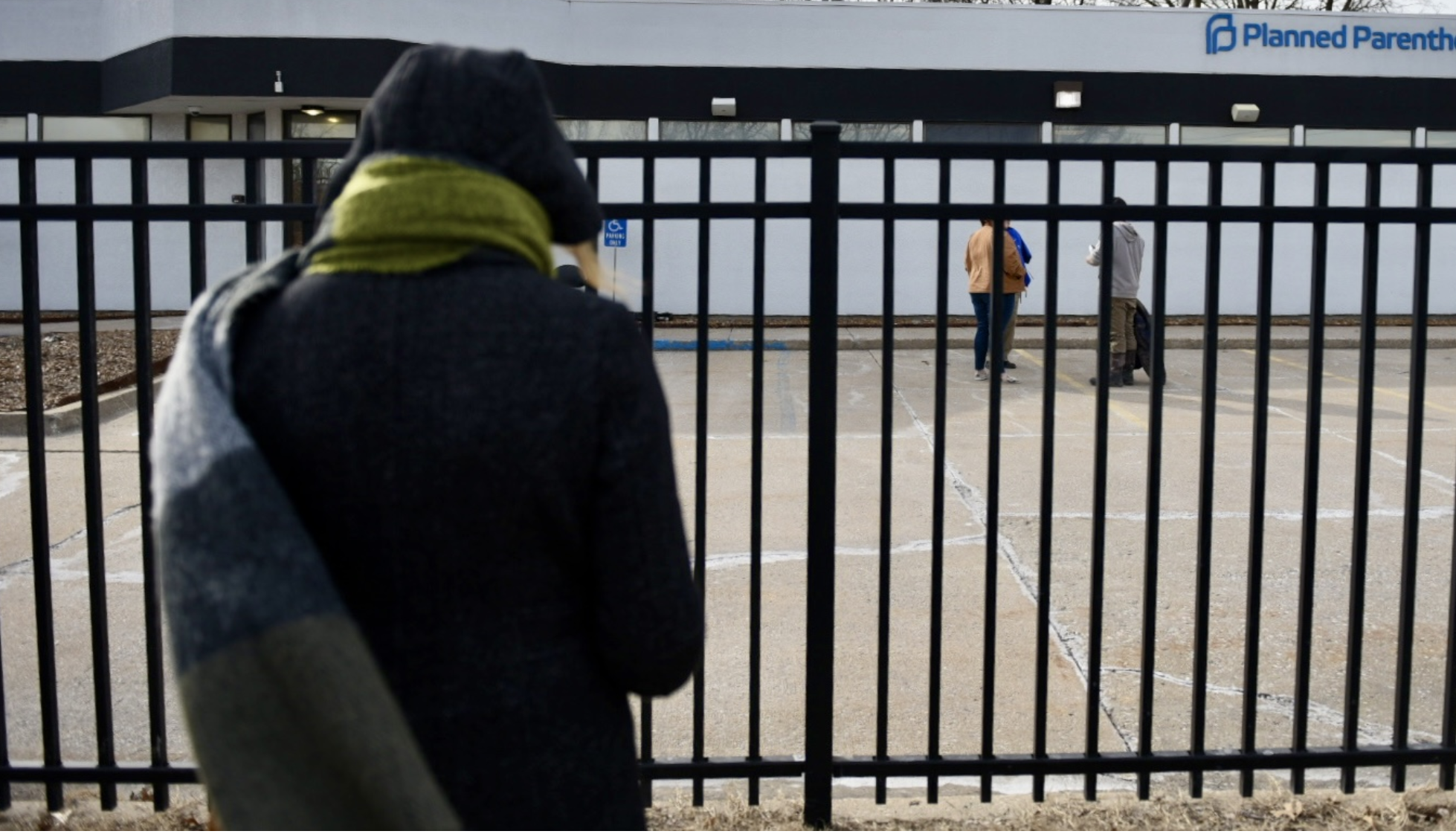
Since then, Raymond has become an anti-abortion activist, testifying that she has prayed outside of a Planned Parenthood Great Rivers clinic and tries to talk to people going inside.
“I don’t want other women and families to make the choice that I ultimately made,” she said.
One of the laws at issue requires patients to be given a copy of Missouri’s informed consent booklet prior to an abortion — a 26-page pamphlet that begins with a statement that human life begins at conception and “abortion will terminate the life of a separate, unique, living human being.”
It also includes information about fetal pain beginning at 16 weeks or earlier, even though the American College of Obstetricians and Gynecologists says that a multitude of studies have established that fetuses cannot feel pain until closer to viability, around 24 weeks of pregnancy.
The law also mandates a 72-hour waiting period between an initial appointment and the procedure, when a doctor or other qualified professional must inform the patient of the “immediate and long-term medical risks to her and possible adverse psychological effects associated with the abortion.”
Attorneys for the state have previously emphasized the need for a “reflection period” for women before they move forward with an abortion. Those who testified for Planned Parenthood last week said it put a huge burden on patients, especially those who had to take time off work, arrange child care or travel long distances to get to the clinic.
Having a wanted abortion isn’t linked to mental health issues, but being denied a wanted abortion is, according to the American Psychological Institute. Dr. Daniel Grossman, who was called to testify last week by Planned Parenthood’s attorneys, told the court he regularly reviews literature on abortion and mental health and hasn’t seen any evidence of abortion increasing the risk of mental health problems.
But more recent studies, like the Turnaway Study, paint a better reality, he said. That study, led by one of Grossman’s colleagues at University of California San Francisco, where he serves as director of Advancing New Standards in Reproductive Health, focused on 1,000 women who sought abortions between 2008 and 2010 years, and then followed them for five years after they either received an abortion or were unable to get one, including because of state laws banning or limiting abortion.
This study, Grossman testified, found anxiety rates were higher among women who had just been denied abortions. But after five years, he said, there was no difference in the mental health of the groups who had abortions versus those turned away. Grossman is also a liaison to Planned Parenthood’s National Medical Committee.
According to Missouri public records, post-abortion complication reports from 2018 to 2022 show no patients with a diagnosable psychiatric condition listed as a complication.
Stephanie Jacobson, who was a Missouri resident until about four years ago, had an abortion when she was 16 in 1978, and another when she was 18. Jacobson went on to have five children, but testified Tuesday that the abortions “ravaged” her and left her with depression and anxiety that lingered until she went through an abortion recovery program less than a decade ago.
Now Jacobson is a coach for an abortion recovery hotline, though she said that has exacerbated her mental health issues.
During her testimony, she recounted one “intense” call from a woman who was panicked and screaming after having a medication abortion at home. Jacobson said while she was trying to talk the woman through what she could do with the fetal remains that were sitting on a cloth on the counter, the woman said her cat started eating them.
Attorneys for the plaintiff immediately objected to Jacobson’s testimony as hearsay, and Zhang agreed to strike it from the record. However, the state opted to bring Jacobson back to the stand later in the afternoon to tell the same story again with more detail “on proffer,” which means it won’t be considered as evidence in this trial but could be considered on appeal.
The state also called Dr. Monique Wubbenhorst, who practiced as an OBGYN for more than 30 years but has never performed an abortion and is against abortion in all circumstances except to save the pregnant patient’s life. Her testimony included many of the same arguments that were already discussed in the first week of the trial, such as the safety of medication abortion.
Wubbenhorst’s testimony will conclude Wednesday morning, and the trial is expected to end on Monday.