


BY ANNA KAMINSKI
Kansas Reflector
TOPEKA — In Vicki Schumacher’s nutrition services office at Wichita Public Schools, staff spend roughly two hours verifying one free lunch application from start to finish.
Under proposed legislation, the office could see its work increase twentyfold.
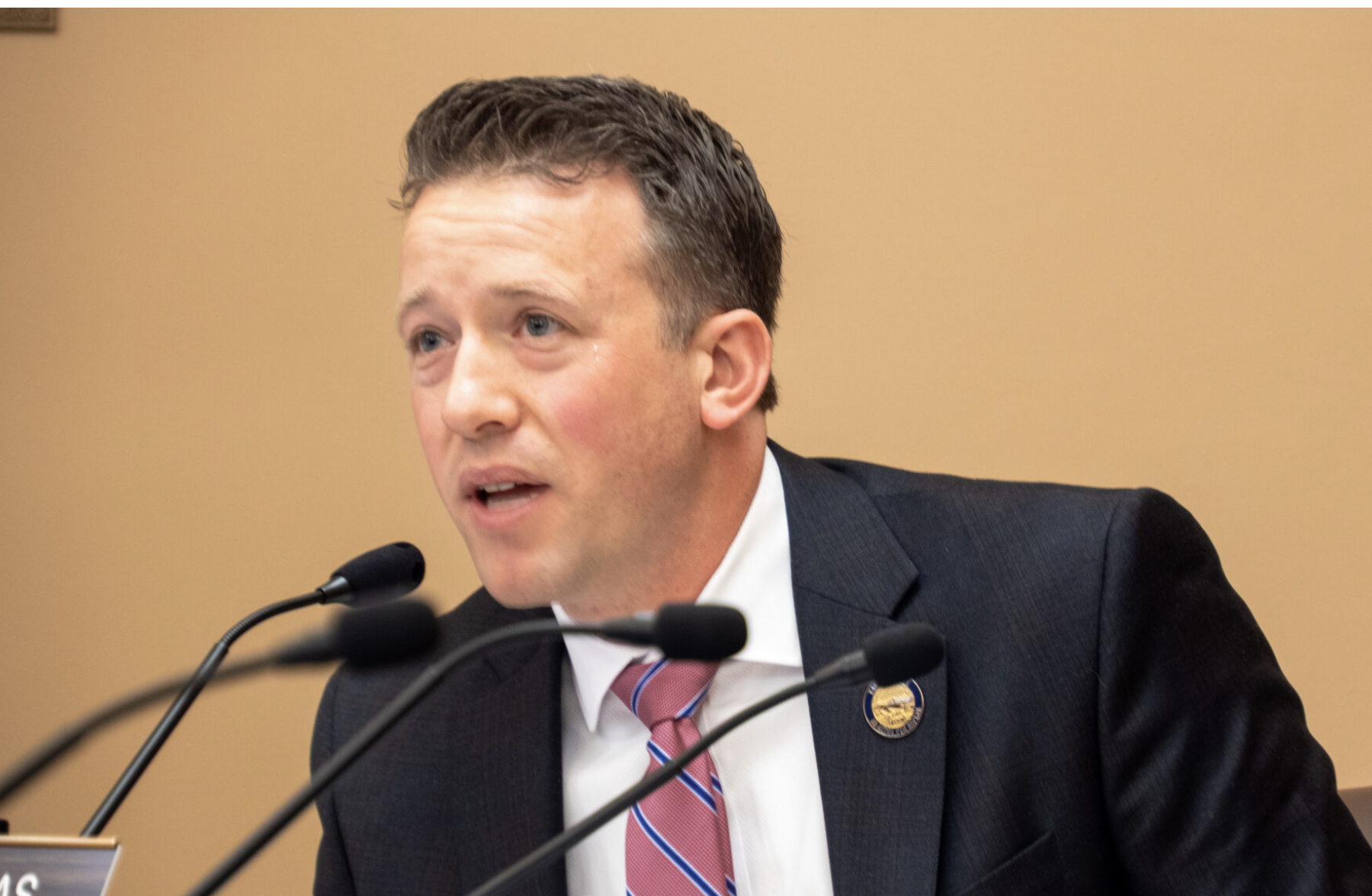
Current federal law requires schools to verify free and reduced lunch eligibility for a random sample amounting to 3% or 3,000 of recipients — whichever is less — but a bill sponsored by Republican Sen. Doug Shane requires verifying the gross household income of every student who receives a free lunch.
For Schumacher, who supervises the financial and technical aspects of Wichita Public Schools’ nutrition services, Senate Bill 387 would turn two months of work into a year-round responsibility.
“It would turn the focus of our office into an auditing firm rather than feeding children,” she said, testifying virtually at a Thursday hearing before the Senate Committee on Government Efficiency, or COGE.
Shane, a veterinarian and professor from Louisburg, was one of three proponents who submitted testimony, and Schumacher was one of about 35 opponents.
To Shane, the change is not an unreasonable ask. The bill’s focus is broader than income verification for households receiving free and reduced lunch, which is a U.S. Department of Agriculture program.
Kansas schools are eligible for at-risk funding that is calculated based on the number of students who apply for free lunch. At-risk funding, which comes from the state, is meant to address kids who are at risk of academic failure and does not automatically apply to students participating in free lunch programs.
The free lunch data is a proxy for determining at-risk funding levels, said Frank Harwood, deputy commissioner for the Kansas State Department of Education.
At-risk funds can only be used for a specific set of programs approved by the state board of education. For 2025, some of them included phonics and literacy practice, math instruction, suicide prevention, writing workshops, after school homework help and character development programs.
At least 12 of the programs support English language learners.
“This bill simply seeks to make sure that we are sustainably funding and fully funding our at-risk obligations, and ensuring that obligation is going to the students that really qualify and really need it,” Shane said.
The stage for the bill was set by an audit published in July, which found that the number of students who were used to determine at-risk funding levels appeared to be “significantly more” than the number of students eligible for the free lunch program.
The House Welfare Reform Committee discussed the audit Jan. 20, honing in on a finding that estimated 54% to 72% of students who qualified for the free lunch program in Kansas were likely ineligible during the 2023-2024 academic year. Auditors said the USDA may have overpaid Kansas school districts between $10 million and $14 million that year, and the state may have overpaid between $38 million and $53 million in at-risk funding.
The audit, however, contained caveats that noted unverified data and data from sources outside the state education department. It found school districts and the state are limited in their ability to verify the accuracy of the list of students automatically enrolled in free lunch. Auditors couldn’t independently verify household income or size.
“The lack of income verification means the free lunch program is at high risk of fraud, waste and abuse,” the audit said.
The U.S. Government Accountability Office, the federal auditing arm, found in a 2019 report that payment error rates in the USDA’s national school lunch and breakfast programs have been high, indicating a potential vulnerability to fraud.
No instances of fraud were directly identified in the Kansas audit, but auditors did compare state data with U.S. Census Bureau data that estimated the number of public school students in households with incomes at or below 130% of the federal poverty level. Auditors found that the number of students receiving free lunch in Kansas was more than double what Census projections approximated.
The state education department maintains that free lunch eligibility lists are a snapshot in time and don’t account for potential life changes such as job losses or promotions.
The state auditing office recommended that lawmakers consider reworking the at-risk funding formula, which is not a part of Shane’s bill.
At-risk funding numbers are counted Sept. 20, per state law, and students are eligible for free and reduced lunch for one school year plus around six weeks into the following school year, so students whose eligibility may not continue into the next school year could still be counted for at-risk funding.
Harwood, who provided neutral testimony to the committee, emphasized to legislators the bill, if passed, would conflict with federal law.
In 2024, there were around 200,000 free lunch students in Kansas, and around 275,000 students were eligible to participate in at-risk programs, Harwood said. It’s never been a one-to-one match, he said.
“In many ways, I think the formula is working exactly the way it has been intended to work because this idea that free lunch had some eligibility issues is not new,” he said.
Another piece of the bill requires legislative approval if schools want to utilize the USDA’s Community Eligibility Provision, which allows schools to provide free lunch to all students if 25% of a student population is directly certified for free lunch. A student is directly certified as a free lunch student if he or she experiences homelessness, is a runaway or a migrant, is in foster care or is part of a household that uses federal assistance benefits such as the supplemental nutrition assistance program or Medicaid.
Harwood again warned of being in conflict with federal law. The state department of education is not allowed to prohibit a school from utilizing the community eligibility provision.
Around 75% of schools in Kansas qualify for a program that would offer free lunch to all students regardless of eligibility. Only 13% have taken advantage, as of 2024 data.
All of the bill’s proposals are unfunded. The fiscal note indicates the heightened cost to schools, districts, the state education department and the Legislature to meet each of the criteria.