


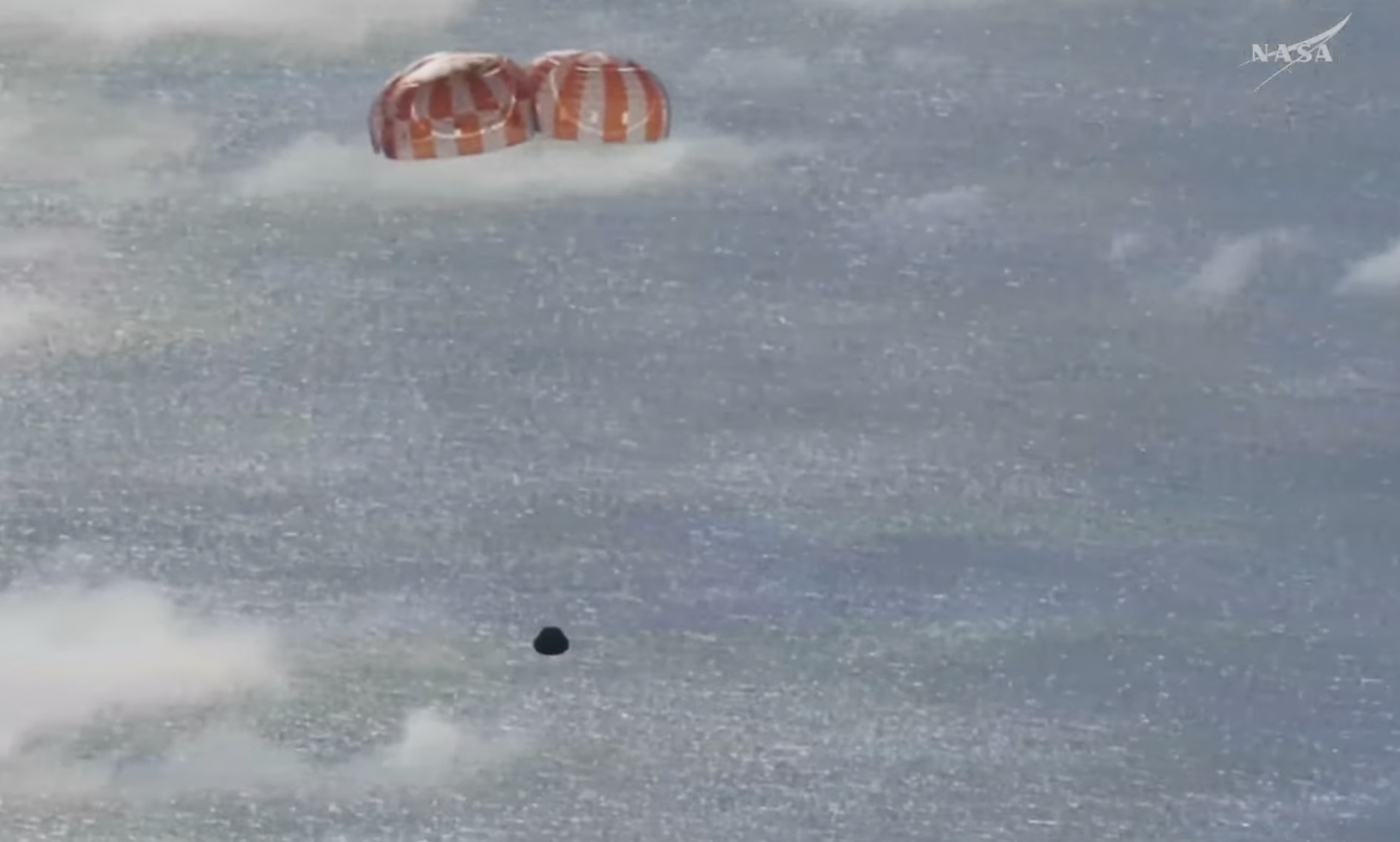
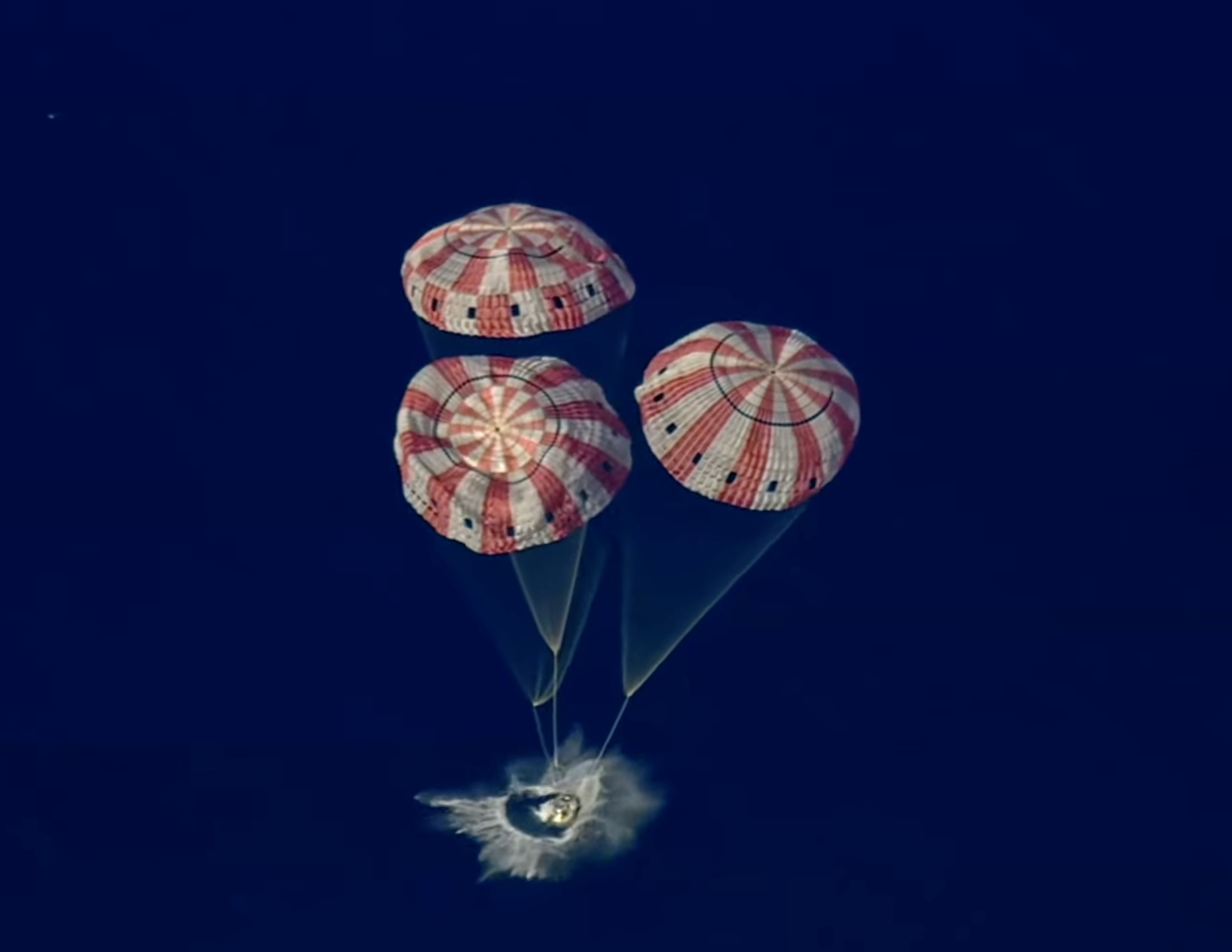
HOUSTON (AP) — Artemis II’s astronauts returned from the moon with a dramatic splashdown in the Pacific on Friday to close out humanity’s first lunar voyage in more than a half-century.
It was a triumphant homecoming for the crew of four whose record-breaking lunar flyby revealed not only swaths of the moon’s far side — never seen before by human eyes — but a total solar eclipse.
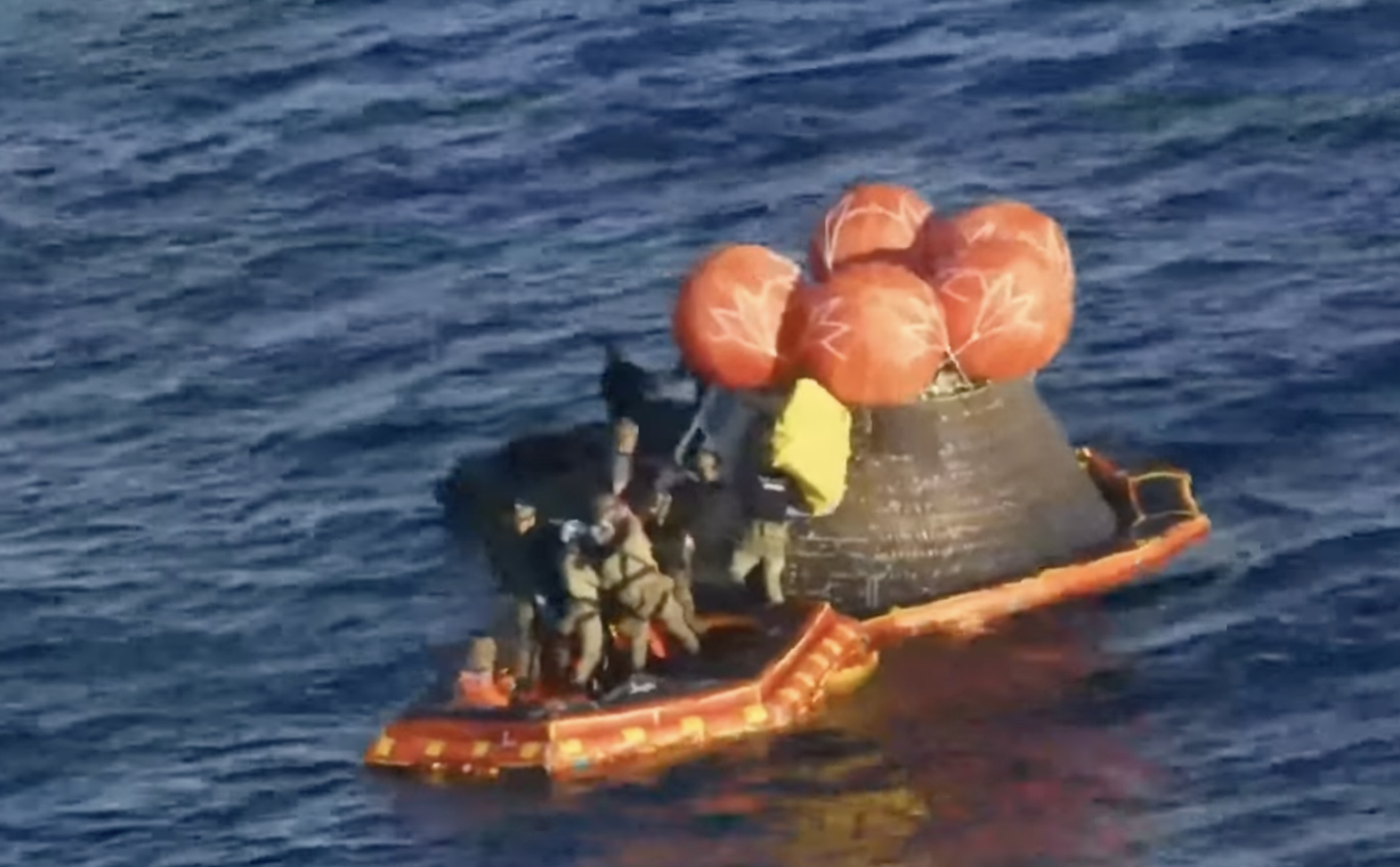
Commander Reid Wiseman, pilot Victor Glover, Christina Koch and Canada’s Jeremy Hansen hit the atmosphere traveling Mach 33 — or 33 times the speed of sound — a blistering blur not seen since NASA’s Apollo moonshots of the 1960s and 1970s. Their Orion capsule, dubbed Integrity, made the plunge on automatic pilot.
The tension in Mission Control mounted as the capsule became engulfed in red-hot plasma during peak heating and entered a planned communication blackout.
All eyes were on the capsule’s life-protecting heat shield that had to withstand thousands of degrees during reentry. On the spacecraft’s only other test flight — in 2022, with no one on board — the shield’s charred exterior came back looking as pockmarked as the moon.
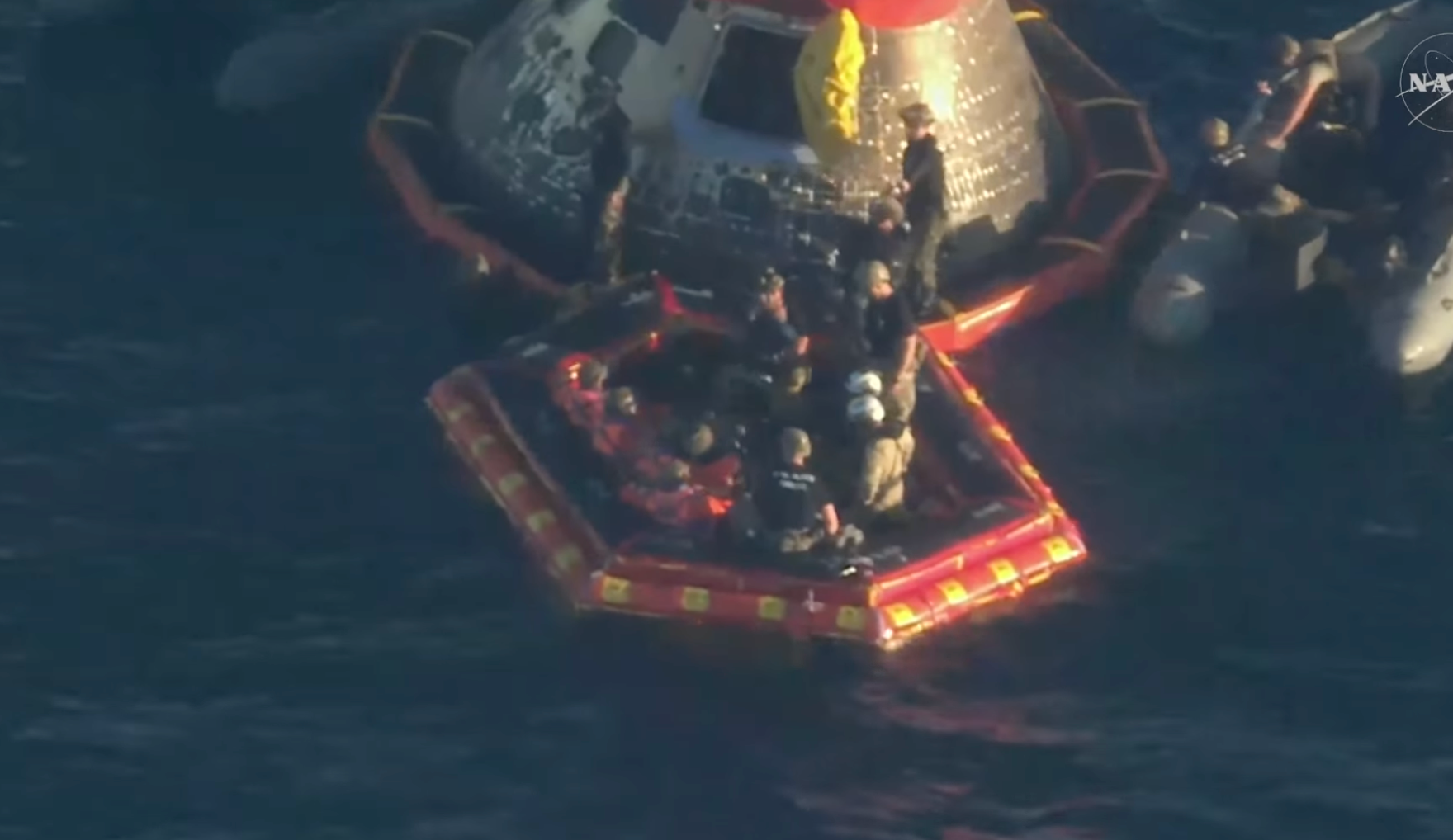
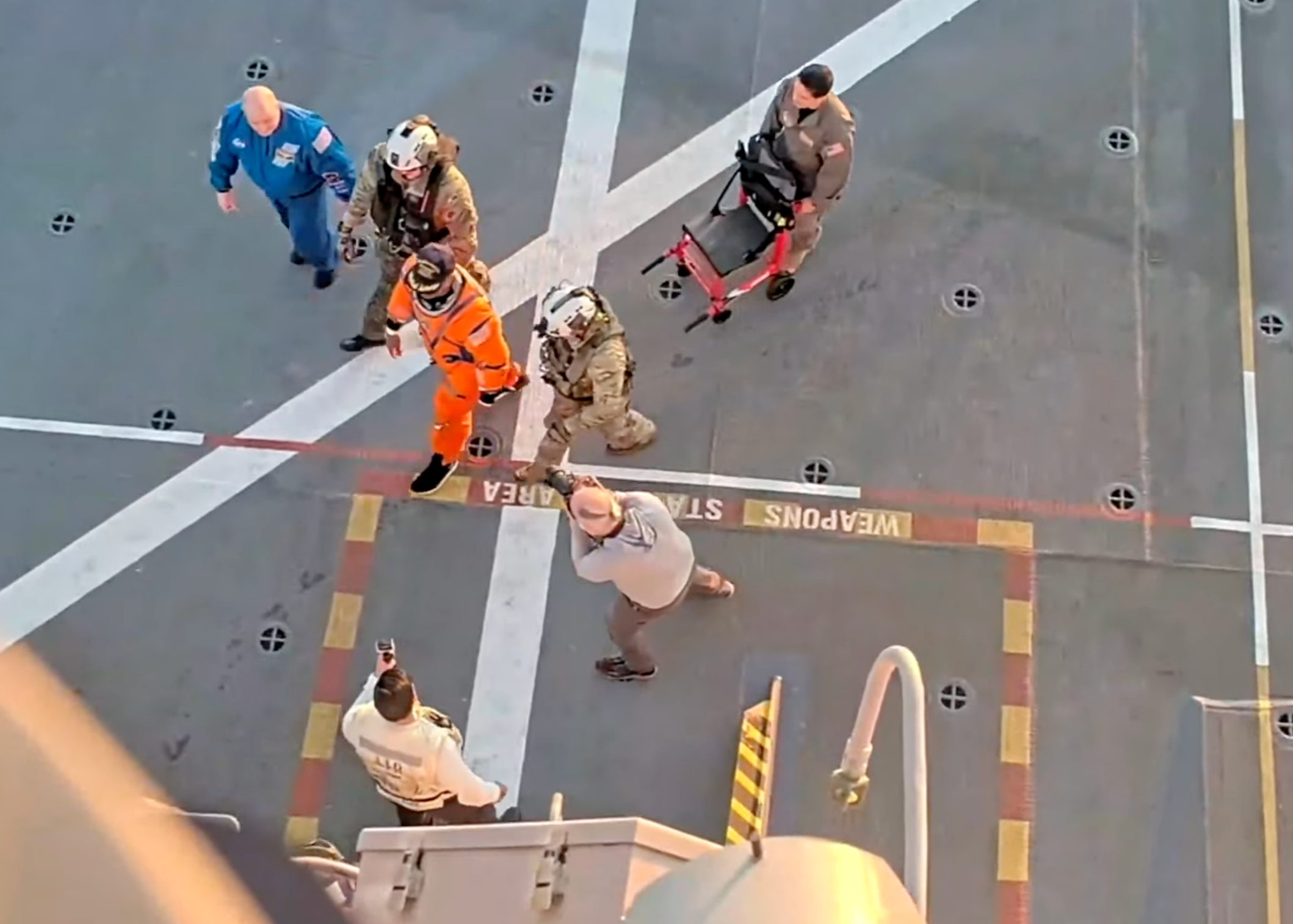
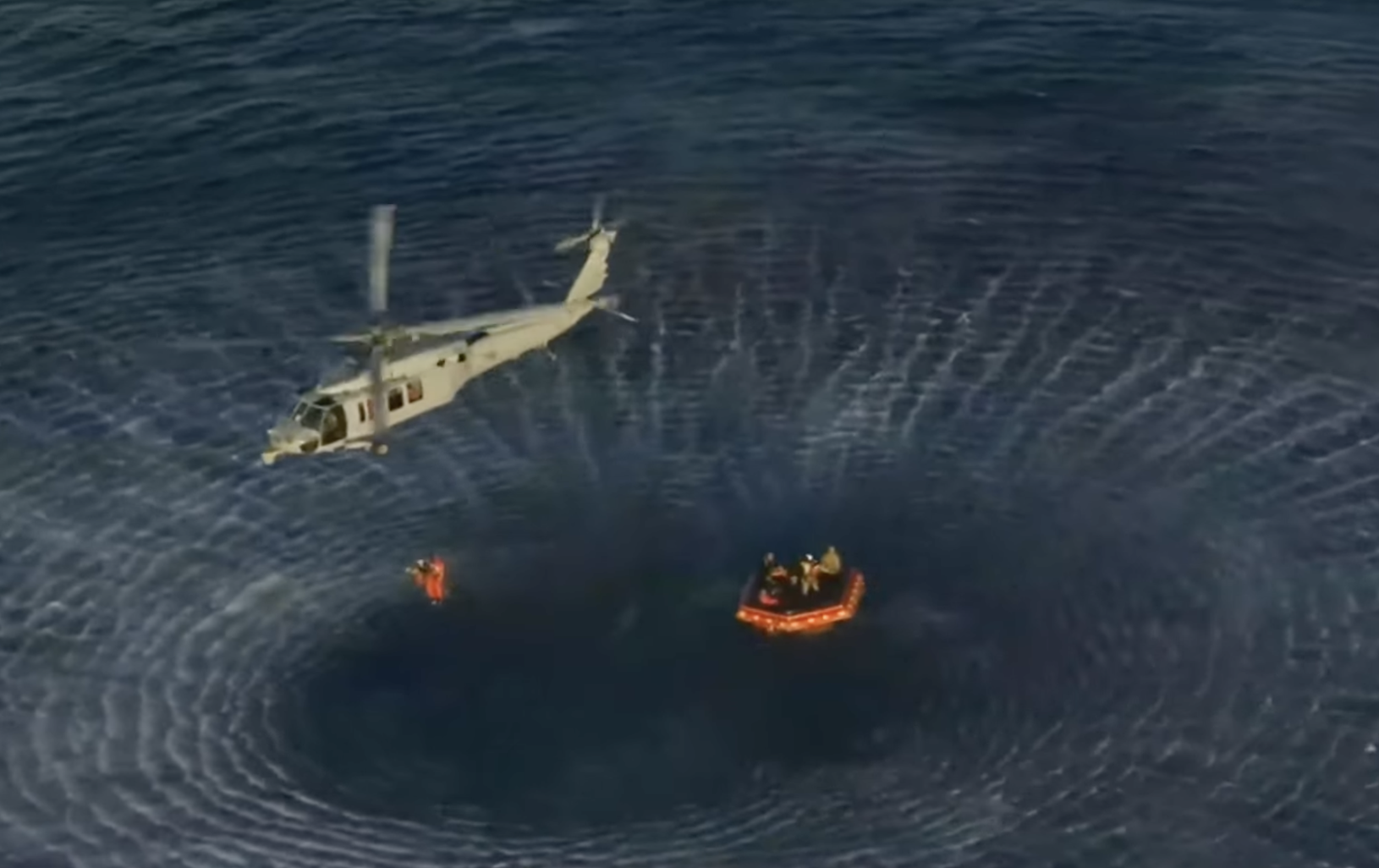
Like so many others, lead flight director Jeff Radigan anticipated feeling some of that “irrational fear that is human nature,” especially during the six-minute blackout that preceded the opening of the parachutes. The recovery ship USS John P. Murtha awaited the crew’s arrival off the San Diego coast, along with a squadron of military planes and helicopters.
The astronauts’ families huddled in Mission Control’s viewing room, where cheers erupted when the capsule emerged from its communication blackout and again at splashdown.
The last time NASA and the Defense Department teamed up for a lunar crew's reentry was Apollo 17 in 1972. Artemis II was projected to come screaming back at 36,170 feet (11,025 meters) per second — or 24,661 mph (39,668 kph) — just shy of the record before slowing to a 19 mph (30 kph) splashdown.
“A perfect bull’s-eye splashdown,” reported Mission Control’s Rob Navias.