


Concern stems from failure to appoint deaf individuals to search committee
By: Tim Carpenter
Kansas Reflector
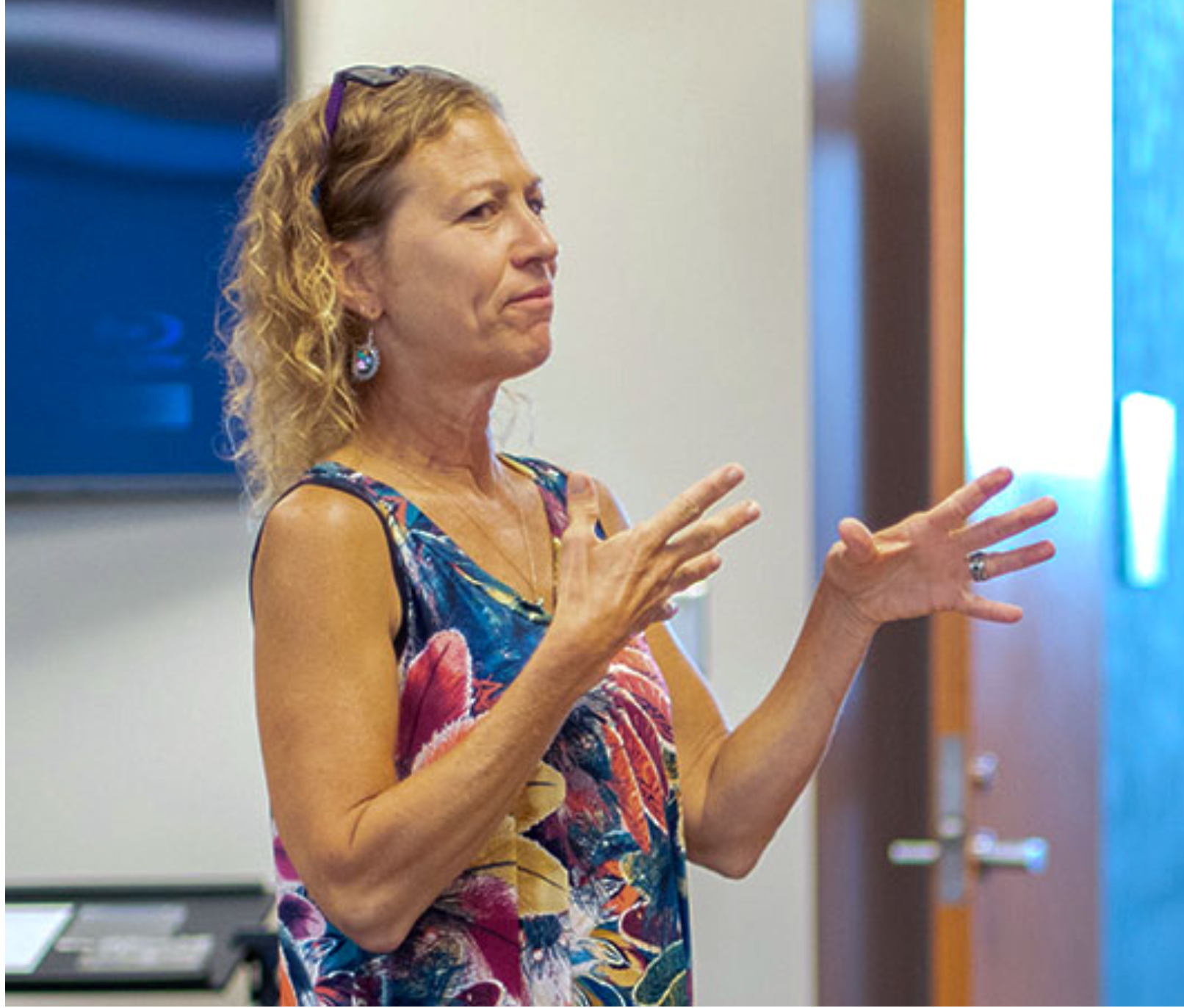
TOPEKA — Sign language educator Petra Horn-Marsh used hand gestures and facial expressions to deliver a message of unequivocal distress to the Kansas State Board of Education.
Horn-Marsh, with more than 30 years of experience in the field of deaf studies, asked the 10-member state board to restart the search for a new superintendent at the Kansas School for the Deaf in Olathe. The fatal flaw in the current superintendent process, she said through an interpreter providing a voice translation, was the lack of deaf people on the search committee.
“There are huge concerns,” Horn-Marsh said. “There was no deaf individual that served on the search committee. We’d like the search to be reopened and include deaf community members in that work.”
Luanne Barron, superintendent of the School for the Deaf for the past nine years, announced in December that she would retire in June after 40 years in deaf education.
Horn-Marsh, who was born deaf and now teaches in the American Sign Language program at the University of Kansas, shared the critique of the superintendent search process Tuesday during the public comment portion of the state Board of Education meeting in Topeka. She did so at the request of Chriz Dally, executive director of the Museum of Deaf, History, Arts and Culture in Olathe. Dally couldn’t be present.
Members of the state Board of Education, which serve as the governing body for the School for the Deaf, didn’t respond to the appeal. There could be urgency to the situation, because the Board of Education scheduled a visit to the school on Wednesday. The board’s public agenda included a campus tour and meetings. The schedule also referenced a closed-door executive session that could lead to formal action, but the published agenda didn’t specify the subject.
Interviews with the two finalists for superintendent occurred in March. The state board indicated the decision to hire a superintendent could be expected in April or May.
Finalists for the job — Jennifer Kucinski and Michele Handley — both have decades of experience as deaf education professionals.
Kucinski serves as special education administrator, admissions coordinator and extended school year director at the Kansas School for the Deaf. She earned master’s and bachelor’s degrees in psychology at Gallaudet University in Washington, D.C. She is working on a doctorate in education at KU.
Handley worked as a deaf and hard of hearing consultant for the Michigan Department of Education and as superintendent of the Eastern North Carolina School for the Deaf. She earned a doctorate in special education at University of Northern Colorado, a master’s degree in deaf education from Georgia State University and a bachelor’s degree in psychology at University of Georgia.
The Kansas School for the Deaf is a state-funded public institution created in the 1860s with responsibility for providing instruction to students ages 3 to 21. The tuition-free school has a statewide constituency, offers day and residential academic services and has an average enrollment of 150. American Sign Language is the primary language of instruction.
The advertised invitation to applicants for superintendent didn’t include a requirement that they be hard of hearing or deaf. Qualified applicants would need a minimum three years of leadership and management in deaf education. They must possess a “working knowledge of the importance of bilingual education and deaf culture.”
Applicants would be expected to “communicate clearly and appropriately” with all stakeholders in sign language and English. The next superintendent must attain fluency in ASL within three years of being hired.
Harmony Jarratt, a teacher at School for the Deaf and the parent to a student at the school, also addressed the state Board of Education on Tuesday. She recommended better coordination among the School for the Deaf, public school districts and families with a hard of hearing or deaf child. Open lines of communication could better identify students in need of specialized instruction available at School for the Deaf before it was too late, she said.
“Before we talk about reading levels, test scores or any performance measures, we need to be talking about the systematic crisis of language deprivation. Without language, you can’t think. And without thinking, learning is almost impossible,” Jarratt said.
She recounted working last year with four students ages 9 to 11 with “no language” skills because they remained in a local school district for too many years.
“Imagine if you had a baby and decided not to talk to them for 10 years. That’s what many of our students experience,” Jarratt said.